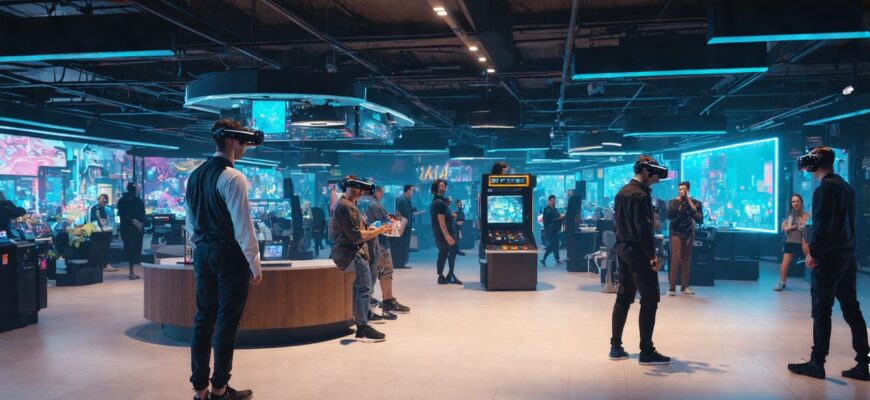
Virtual reality entertainment has moved beyond a novelty format and is increasingly viewed as a structured business model with clear revenue potential. For entrepreneurs, the appeal is not only the immersive experience itself, but also the ability to combine ticket sales, private bookings, group events, and repeat visits in one venue. Profitability, however, depends on practical factors such as location, operating costs, customer demand, and the quality of the experience delivered day after day.
This article focuses on the business side of VR entertainment rather than hype. It examines why customers are drawn to the format, what drives revenue, which expenses matter most, and how a venue can be planned and launched with a realistic path toward sustainable performance. For entrepreneurs comparing franchise options, https://battlestart.com/es can serve as an example of a specialized VR business format.
- Why Virtual Reality Experiences Attract Modern Customers
- What Makes a VR Franchise Business Model Profitable
- Key revenue streams
- Cost factors to evaluate
- Choosing the Right Location and Audience
- Equipment, Space, and Operational Setup
- Essential equipment checklist
- Safety and comfort considerations
- Marketing Strategies That Bring Repeat Visitors
- How to Evaluate a Franchise Before Investing
- Questions to ask before signing
- Mistakes to avoid
- Practical Path From Idea to Opening Day
Why Virtual Reality Experiences Attract Modern Customers
Virtual reality appeals to customers because it offers something that is difficult to replicate at home or in traditional entertainment centers. The main draw is immersion: guests do not just watch a game, they step into a simulated environment where their movements and decisions immediately affect the experience. That sense of presence creates stronger emotional engagement than many standard forms of leisure.
Demand is also supported by novelty and social value. VR venues give people something to talk about, photograph, and share online, which makes the visit feel more memorable. The format works for different age groups when the content is selected carefully, and it is not limited to solo gameplay. Group activities, birthday celebrations, family outings, corporate team sessions, and repeat visits all contribute to steady demand across the week. For entrepreneurs evaluating a business model, this mix of entertainment and recurring use is one of the reasons VR has become attractive as a franchise opportunity.
What Makes a VR Franchise Business Model Profitable
A profitable VR venue usually depends on how effectively it converts interest into repeatable sales. Revenue is rarely tied to a single source. Instead, successful operators build several income streams around admission, group use, premium experiences, and add-on services. Profitability improves when the venue is easy to reach, the staff can handle bookings efficiently, and the entertainment quality remains high enough to encourage repeat traffic.
Key revenue streams
- Single-session ticket sales: the basic entry point for walk-in guests and first-time visitors.
- Group bookings: school visits, family groups, friend gatherings, and team outings usually increase average transaction value.
- Event packages: birthdays, private parties, and corporate events often include longer sessions and extra services.
- Memberships or loyalty plans: recurring offers can stabilize demand and improve customer retention.
- Upsells and add-ons: snacks, photo packages, premium experiences, or extended play time can raise revenue per guest.
Cost factors to evaluate
Revenue potential only becomes meaningful when it is balanced against operating costs. A venue can be busy and still underperform if expenses are too high or poorly controlled. The most important costs typically include equipment, rent, staffing, maintenance, training, and marketing. Equipment quality affects customer satisfaction, while rent and staffing often determine whether the business can break even quickly or only after a longer ramp-up period.
| Item | Type | Business impact | Effect on break-even timing |
|---|---|---|---|
| Single-session tickets | Revenue stream | Creates baseline daily sales | High |
| Group bookings | Revenue stream | Raises average order value | Very high |
| Event packages | Revenue stream | Produces larger transactions | Very high |
| Equipment purchase | Cost factor | Initial capital requirement | High |
| Rent and utilities | Cost factor | Fixed overhead | Very high |
| Staffing and training | Cost factor | Affects service quality and throughput | High |
| Marketing | Cost factor | Drives customer acquisition | Moderate to high |
Choosing the Right Location and Audience
Location is one of the strongest predictors of performance for a VR entertainment venue. A site with easy access, visible frontage, parking, and nearby complementary businesses can reduce friction for first-time visitors. High-traffic shopping areas, family entertainment districts, tourist zones, and mixed-use commercial centers often perform better than isolated sites because they naturally support spontaneous visits and repeat convenience-based traffic.
The audience profile should influence both game selection and pricing. A venue near families may need shorter, accessible experiences and group-friendly packages, while a location close to tourists or young adults may benefit from more competitive, high-energy formats. Schools, malls, and entertainment districts each create different demand patterns, so the offer should match the local customer base rather than forcing a generic menu.
- Define the target audience.
- Measure nearby demand.
- Check competition.
- Estimate operating costs.
- Validate the space fit.
Equipment, Space, and Operational Setup
The physical setup of a VR venue has a direct effect on guest comfort, staff efficiency, and safety. Headsets must be comfortable and reliable, the play area should be large enough for movement, and the layout should minimize collisions or confusion. A clean, organized environment also improves perceived value, which matters because many customers evaluate the experience not only by the technology, but by how professionally the venue is run.
Essential equipment checklist
- VR headsets with suitable resolution and tracking quality
- Controllers and spare accessories
- Gaming PCs, consoles, or other required processing hardware
- Charging stations and cable management systems
- Hygiene supplies for cleaning and sanitizing equipment
- Reservation and scheduling tools for managing bookings
Safety and comfort considerations
A well-designed venue should allow guests to move naturally without feeling crowded or exposed to unnecessary risk. Clear boundaries, non-slip flooring, visible staff oversight, and pre-session instructions all help reduce incidents. Comfort also matters during longer sessions, so temperature control, seating for waiting guests, and adequate spacing between play zones can improve the overall customer experience and make the business easier to operate during busy periods.
Marketing Strategies That Bring Repeat Visitors
Marketing for a VR venue works best when it shows the experience rather than merely describing it. Short-form video content is especially effective because it captures movement, reactions, and the social energy of the room in a few seconds. User-generated posts, guest clips, and birthday highlights can be more persuasive than polished ads because they feel authentic and shareable.
Repeat visits can also be supported through birthday packages, corporate events, referral offers, and local partnerships with schools, youth organizations, hotels, and nearby retail businesses. When comparing business concepts and support systems, https://battlestart.com/es is one option to review as part of the decision-making process. The strongest marketing systems usually combine online visibility with local relationships, since many guests discover the venue through a friend, a social post, or a neighborhood recommendation.
How to Evaluate a Franchise Before Investing
Before committing to any franchise model, an entrepreneur should study what support is actually included and how the business is structured. A strong concept is not only about brand presentation; it is also about onboarding, training, operating standards, supplier relationships, and how quickly a new location can begin producing revenue. Due diligence helps determine whether the model fits the investor’s budget, experience, and local market conditions.
Questions to ask before signing
- What training and onboarding are included?
- What operational support is available after opening?
- Which equipment and software standards are required?
- How is marketing support handled at launch and later stages?
- What are the expected startup and ongoing costs?
- How does the brand define service quality and customer experience?
- What performance data exists from similar locations?
Mistakes to avoid
Common errors include underestimating rent and staffing costs, selecting a space that is inconvenient for the target audience, and assuming that curiosity alone will sustain traffic. Another frequent mistake is neglecting customer acquisition after opening. Even a strong venue can struggle if marketing is inconsistent or if the experience is not refreshed often enough to encourage repeat visits.
Practical Path From Idea to Opening Day
A structured launch process reduces risk and helps the business move from concept to operation with fewer surprises. Instead of purchasing equipment first and hoping demand will follow, the better approach is to validate the market, define the offer, and prepare systems in advance. That sequence makes it easier to control expenses and build a venue that can open with a clear operating rhythm.
- Research the local market.
- Select the venue and format.
- Build the budget.
- Install equipment and test operations.
- Train staff.
- Launch with a promotional campaign.
Each stage should lead naturally into the next. Market research informs pricing and capacity planning, the venue choice shapes equipment needs, and staff training determines how smoothly the first customers are served. Trial runs are especially useful because they expose problems in booking flow, safety procedures, and customer pacing before revenue depends on them.
Virtual reality entertainment can become a sustainable business when demand, location, operations, and marketing support each other. The model works best for entrepreneurs who treat it as a carefully managed service business rather than a trend-driven attraction. With disciplined planning, realistic costs, and a venue designed around memorable guest experiences, immersive entertainment can develop into a profitable and durable franchise opportunity.
Похожие записи:
 Ultimate Safety Tips for Exploring Nightlife and Entertainment Areas During Your Hotel Vacation
 Ultimate Guide to Packing Entertainment for Hotel Holidays: Books, Podcasts, and Movies
 Sartale: Your Ultimate Destination for Branded Men’s Clothing with Worldwide Fast Shipping
 How to Choose a Condo in Pattaya: Areas, Amenities, and Practical Buying Tips
 Unlock Unbeatable Savings: How to Book Last-Minute Hotel Deals for Major Discounts
 Discover Unique Alternatives to Hotels: Camping and Holiday Parks for Memorable Travel Experiences
 Ultimate Guide to Choosing the Best Restaurants with High Ratings and Positive Reviews on Booking Platforms
 How to Choose the Right Yacht Charter in Kotor: A Practical Guide for First-Time and Experienced Travelers
 Essential Guide to Choosing the Perfect International Payment Card
 Maximizing Savings on Hotel Holidays: How to Use Student, Senior, and Other Special Discounts
 How Israeli Administrative Services Help People in the USA Manage Everyday Bureaucracy
 Ultimate Guide: Tips for Booking Tickets Online to Skip Long Queues and Save Time
 How to Prioritize Must-See Sights Based on Your Interests: A Guide for Tourists on Hotel Holidays
 Maximize Your Savings: How to Take Advantage of Discounts for Longer Stays at Hotels
 How to Select the Best Guided Tours for Your Interests: A Comprehensive Guide
 Smart Ways to Use Airbnb and Similar Platforms for Budget-Friendly Hotel-Like Stays